Fire Emblem: Fortune’s Weave might be the biggest game in the series
Hands-on: Intelligent Systems’ latest packs dozens of hours of activities into just the first part of its story

Fire Emblem: Fortune’s Weave is already one of the most expansive and granular strategy RPGs I’ve played in recent years, and it feels as if I’ve barely scratched the surface.
Not content with simply giving players a deep, narrative-driven SRPG to spend a few dozen hours in, the latest Fire Emblem game is packing four individual paths through just the first part of the game, and each can take nearly two dozen hours to finish — that’s all before moving on to Part 2 of the story.
While most games are long, Fortune’s Weave feels wide. Each of the four characters you can follow through the first part of the game feels like a fully-fledged protagonist. You’ll be able to get to know the full cast by following any single story, but each perspective fleshes out their backgrounds, personalities, and motivations heading into the Heroic Games.
The Heroic Games take place in the capital city of Dagsion, and it’s the melting pot where all of our protagonists converge, taking their first steps on the path toward a greater destiny. Here you can visit each of the Gods, take on side quests, and upgrade your team for the battles ahead. While participating in the Heroic Games, you’ll be given a set number of days to use up while waiting for your next fight. During that time, you can spend your days on a variety of tasks, Persona-style, but the main one will probably be exploring the Dagdan Empire.
There’s a surprisingly expansive world map you can uncover while harvesting materials, visiting other towns and Temples, and delving into dungeons. Dungeons are probably the most interesting new aspect of Fortune’s Weave, heavily inspired by the ones we saw in Fire Emblem Echoes: Shadows of Valentia.
Traditional turn-based strategy battles can take too long for a dungeon filled with random encounters, so the big change in Fortune’s Weave is a brand new battle system called a Clash. Here, the strategy is mostly removed, and you simply select which units and attacks should be used on each turn, dealing with whatever retaliation the enemy has in store for you.


It helps dungeons progress faster, though it boils down to a game of resource management, as each Clash will deplete your health and magic, which you can recover at rest points in dungeons. On the upside, you can strike enemies in the overworld to start a Clash, and particularly weak foes will be defeated instantly, saving you a lot of time.
Simple side quests will beckon you toward the furthest edges of the world map, but you’ll need to weigh your curiosity against your resources and how many days you have before your next main mission in Dagsion. It’s simple, but it effectively tugs at your collar to go explore, and you’ll gain plenty of items and experience that will make your next big fight easier to dominate.
It’s best to visit Dagsion often, as certain activities can be undertaken on a weekly basis, including providing service to the Gods, eating meals to increase your support bond, and giving gifts to warriors you hope to recruit. Like Persona, the ticking timer encourages you to use your time wisely, while also keeping you engaged for hours at a time.
“Fortune’s Weave is wide. If you want to beeline through each main story encounter so you can rush through to the end, you can, but there’s so much more to see and do.”
When a dozen hours deep into any given character’s storyline, it’s easy to forget that there are another three to see. You can save your progress in one story and jump over to another character at any point, allowing you to get a full grasp of the story piece-by-piece from each perspective, or take on each character’s story one at a time as if you’re playing four separate games.
Replaying through the Heroic Games section of the story isn’t too taxing, either. If you’d prefer to get straight to the action and skip over the days you’d otherwise spend exploring the world, you can set your party to train for a set number of days, and then immediately jump into the next main fight. These stories don’t have to take dozens of hours to progress through, but you might miss out on scenes that flesh out the main story if you’re too hasty.
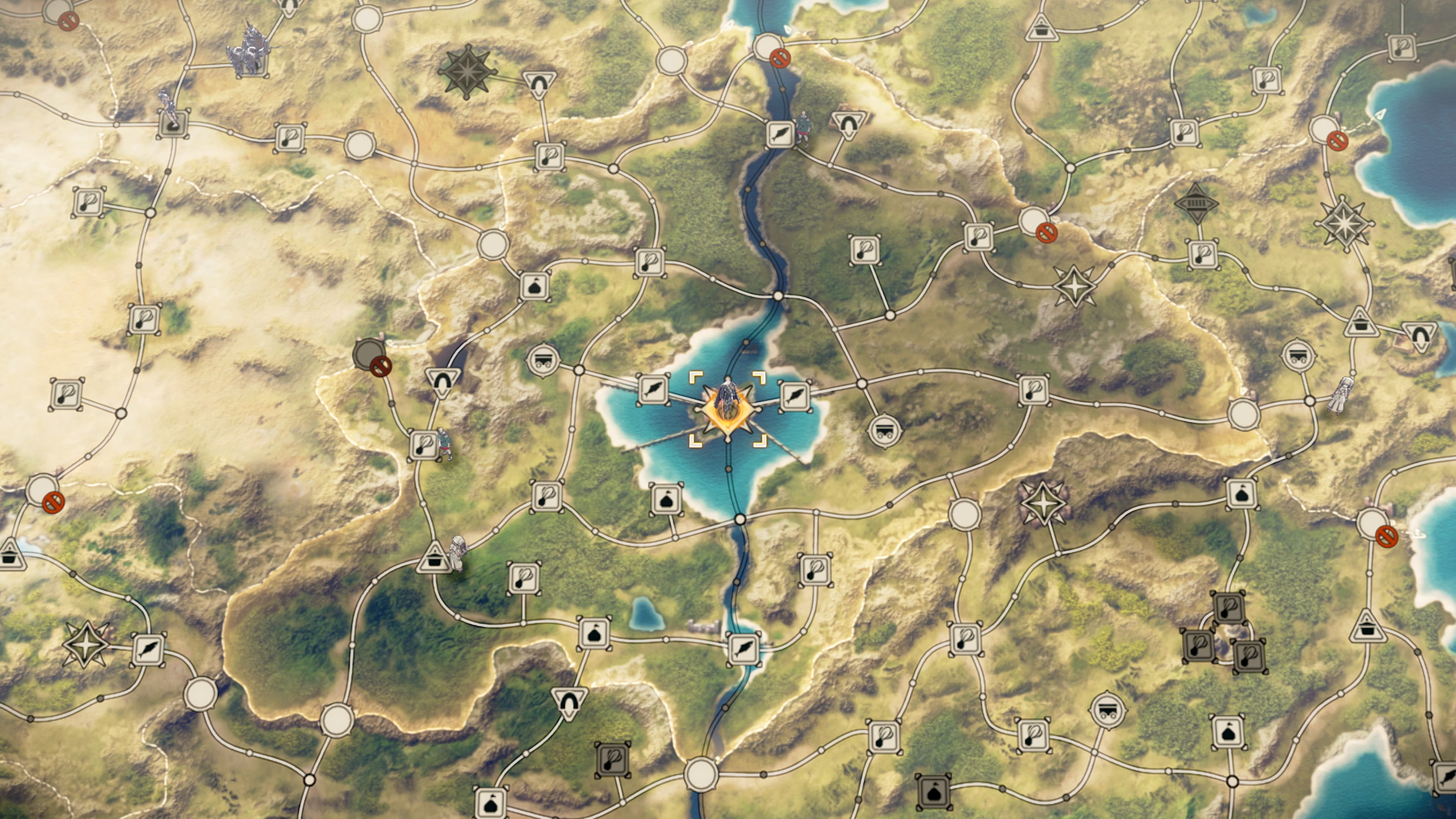
Again, Fortune’s Weave is wide. If you want to beeline through each main story encounter so you can rush through to the end, you can, but there’s so much more to see and do. There’s also a shocking amount of fully-voiced dialogue, fleshing out the full cast and enhancing the emotional weight of the more dramatic scenes.
Fortune’s Weave feels like the biggest and most expansive Fire Emblem we’ve ever had. I’ve seen so much, and I know there’s far more still waiting for me. Whether the rest of the game maintains its early promise will be revealed when our full review goes up before its release on September 17.