Phantom Blade Zero review: A damn good action game that shouldn’t be ignored
S-Game has crafted some of the fastest, most engaging combat of any action game, even if it’s light elsewhere
- Director
- Qiwei "Soulframe" Liang
- Key Credits
- Michael Chang (Producer), Caisheng Bo (Composer)

Phantom Blade Zero is one of the fastest, flashiest action games I’ve ever played.
The pace is unrelenting. PBZ is inspired by classic wuxia fantasy stories about ancient martial artists, and therefore each foe you face off against has a wealth of history and experience behind them for you to overcome. You play as Soul, a former member of The Order who has been framed and now finds himself looking for answers as his former comrades come for his head.
Soul should’ve died, but The Flesh Sculptor came to his aid, gifting him a tainted heart that will keep him alive for just 66 days. In that time, Soul needs to find out exactly why he was framed, and if there’s a way to heal his heart. Luckily, as a former member of The Order, he’s also an incredible martial artist.
Phantom Blade Zero is a modern action game, and it plays like one, only with far more personality than average. Yes, you’ll be chaining together attack strings between parries and dodges, but the speed at which battles take place ensures you’ll always be kept on your toes. It’s familiar in terms of what you need to do, but the battles are a completely fresh threat.
In most boss encounters, you’ll be taking out foes by depleting their sha-chi – basically a stamina or stagger gauge – which will then give you a large window of time to unleash your best combos and take chunks out of their health bar before they’re able to get back up. You can dish out attacks without depleting the sha-chi first, but most foes will be able to easily block and deflect your attacks, and even if they don’t, the main health bar is most vulnerable when sha-chi has been taken out.
You can whittle away at your foe’s sha-chi by dishing out your own attacks and parrying anything incoming. Special attacks that glow red or blue can be countered by perfectly dodging or parrying, respectively, while attacks that are accompanied by a black flash should be avoided at all costs.


You can equip two weapons at once, and many weapons will come with their own unique functions, in addition to a new moveset for each weapon type. You’ll swap between them in battle, and using them will charge a combination attack that will catch most foes off guard even if they’ve got full sha-chi. The final piece of the puzzle are the various Phantom Edge weapons you can find and equip. These have limited uses between rests, but can perform a variety of useful actions, from simply unleashing a heavy axe strike, to summoning a small number of warriors to fight alongside you for a short duration.
Phantom Edges bring some flavor to a familiar brew, but the best part of Phantom Blade Zero’s combat puzzle are the bosses. Each boss attacks in a completely unique way, and understanding what to expect from each of them is the key to taking them down.
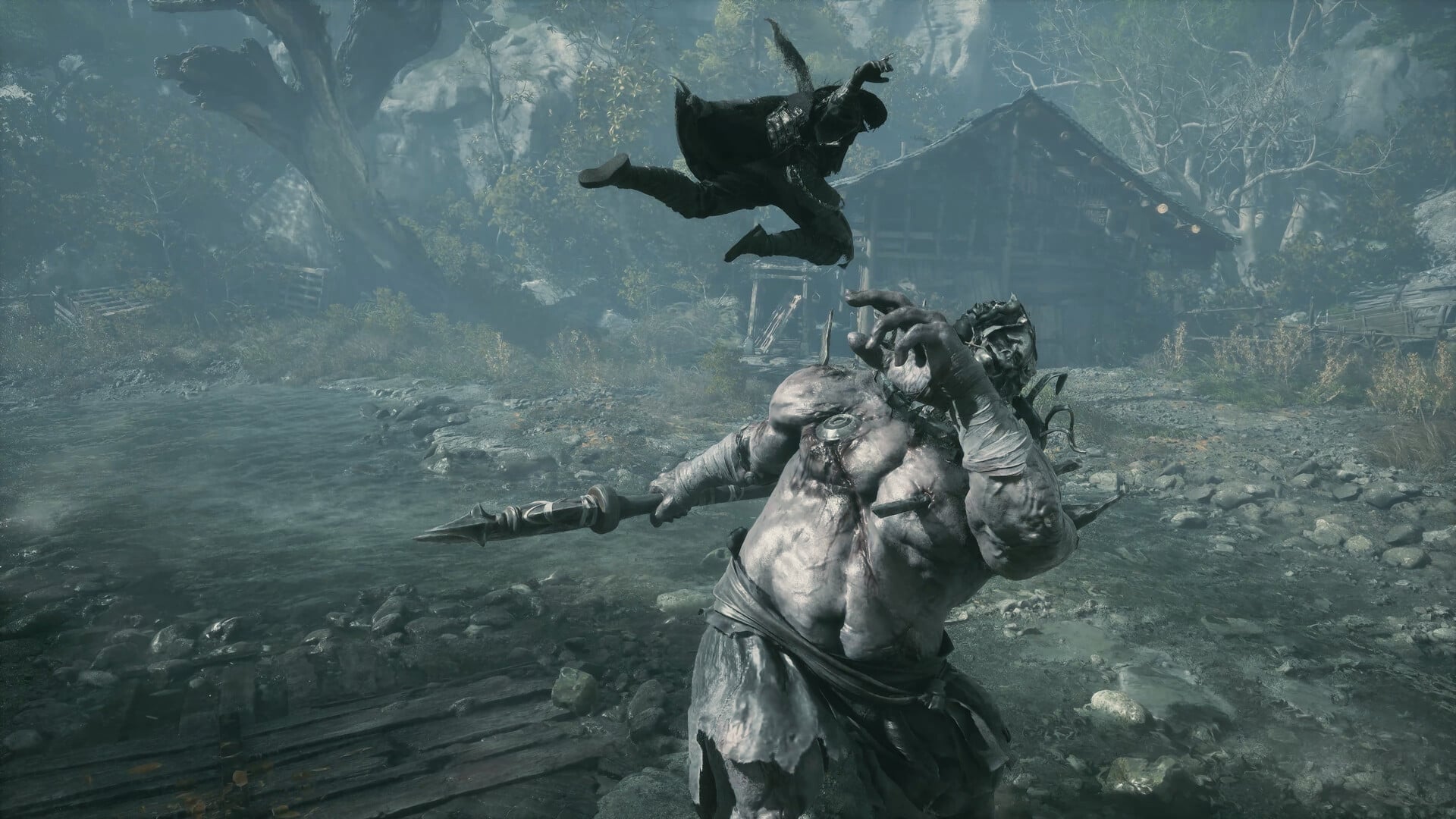
The animations of smaller, more nimble warriors are floaty, like something out of wire-action movies like Crouching Tiger, Hidden Dragon. On your first fight with a new foe, it can be tough to tell when an attack is coming; it simply feels as if attacks come at you as they gracefully glide around the arena. But, as with most action game bosses, repeat attempts reveal the patterns you need to memorize, and that process is as satisfying here as you’d expect. The game is surprisingly forgiving, too: boss fights with multiple phases won’t ask you to repeat a phase you’ve already cleared, even if you fall and have to try again.
“On your first fight with a new foe, it can be tough to tell when an attack is coming; it simply feels as if attacks come at you as they gracefully glide around the arena.”
Massive armored warriors won’t move with the same speed and grace as more nimble foes, but instead each movement becomes hostile. What would be a recovery animation in any other game – the moments after a foe attacks where they compose themselves – is a brutal assault in PBZ. One big foe in particular pounds down with an overhead strike with his giant mace, but even the act of lifting it back up has hitboxes attached to it. One horizontal swing can be dodged, but the weapon will keep swinging around his body, going all the way around for a follow-up attack, and another.
If there’s a key complaint to be made about how combat works and flows, it’s that attacks are so fast that you won’t need to parry them individually. Many enemies will dish out brutal combinations and perhaps even projectiles to split your focus. More attacks will reach Soul than you will have time to physically mash the parry button, so you’ll press the button once to deflect a small barrage of strikes.
Combine these barrages with the fast pace of the game, and I did sometimes feel like certain attack combinations just had me mashing away at the parry button and hoping for the best, instead of truly nailing the timing. And yet, it still worked.
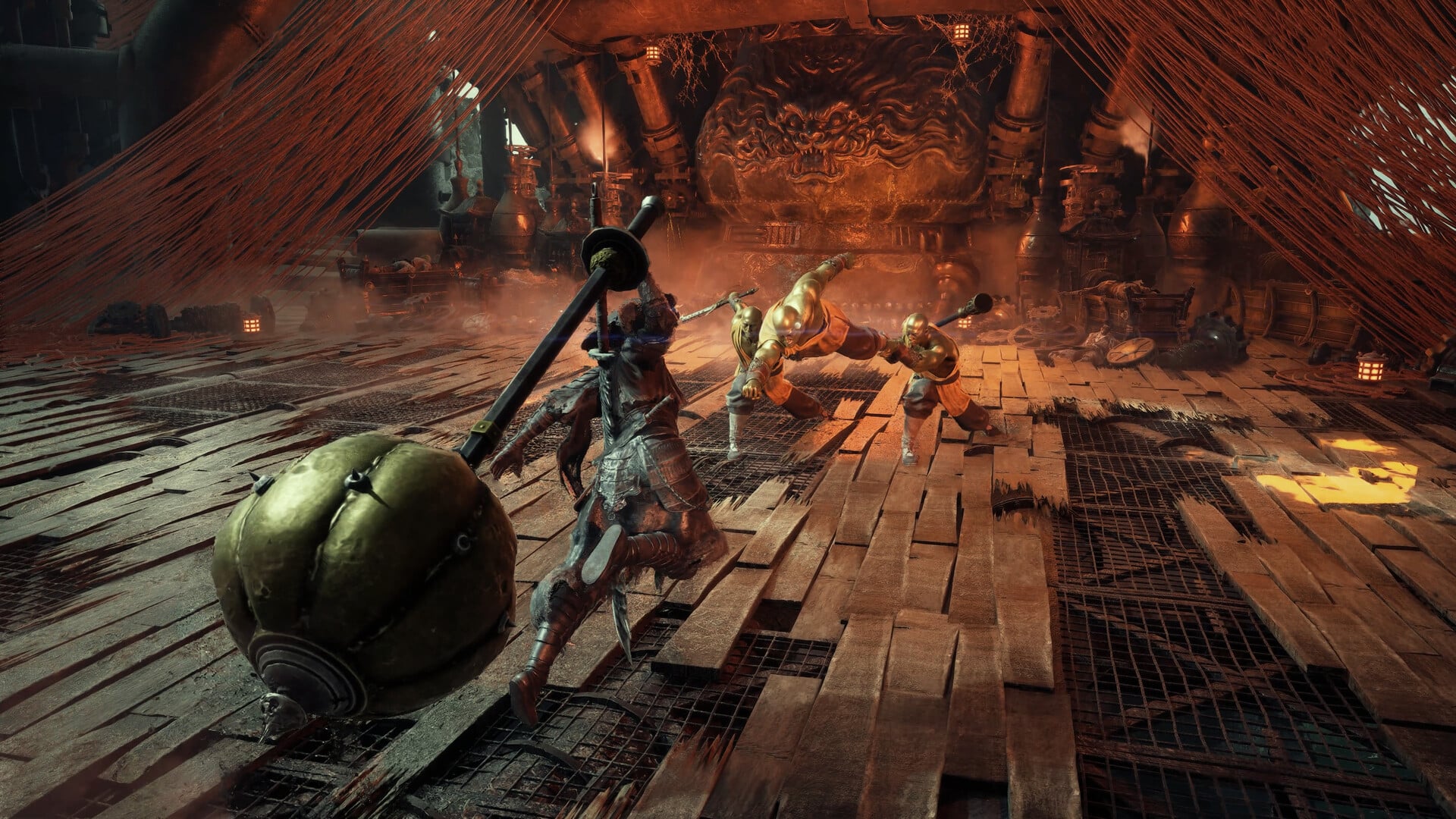
Even the fodder enemies littering stages will prove a challenge initially, even if they’ll eventually become minor nuisances at best. You’ll be taking these smaller foes apart so often and easily that you’ll end up wanting to skip the cinematic execution animations. Having said that, they can still prove to be annoying if there are several throwing attacks at Soul simultaneously.
This has been a very combat-focused write-up so far, and there’s a reason for that. Phantom Blade Zero is an action game, through-and-through, and there’s not actually much unique and interesting outside of that. You’ll explore the Phantom World, a kungfupunk setting (a term coined by developer S-Game) that’s the perfect environment for lavishly detailed, expressive action. The problem is that it’s incredibly linear, and Soul will mostly be following a path with few other routes to choose.
It’s not that there’s nothing else to see in each stage, but you’ll need to unlock keys, weapons, and abilities in order to break down blockades, burn up branches, and open doors to see everything. When you first leave a stage to progress to the next, it won’t be because you’ve found everything. On the contrary, most optional areas in each stage will be locked off until you come back with the necessary tools found in much later stages. There’s more to see, but your first run through each area will be focused on following the only path you have available, and the map will be littered with red icons indicating you’ll need to come back later.
“Phantom Blade Zero is an action game, through-and-through, and there’s not actually much unique and interesting outside of that.”
The map will also get marked with side quest icons that ensure you won’t get too lost or confused while searching for your targets. Most side quests will have you collecting items or defeating enemies, but there are small stories attached to each that’ll introduce recurring characters that’ll provide Soul with valuable rewards and information. They’re not bad, just dull.
That applies to general level design, too. Even though Soul is a talented, athletic martial artist, his base movement doesn’t feel like it. There’s a jump button, but you’ll end up asking yourself why it’s there. Yes, it’s there because there are some aerial attacks you can unleash in battle, but for exploration? There are invisible walls lining each area, ensuring you only go where the developers want you to.
You can’t climb to a rooftop to surprise a foe unless the developers give you a ladder and the opportunity. Soul is nimble enough to do these things, mind, but he’ll only do them if there’s a specific prompt. He’ll scale tall walls, but only if deep scratch marks allow you to press the A button and jump up. Likewise, Soul can use a sickle and chain he obtains early on to swing from branches and ascend to new heights, but only when the prompt allows him to.
Soul’s array of weapons and tools give him more mobility in stages and combat, but the most useful boons are found in the skill tree. New skills allow Soul to equip more accessories, restore sha-chi more effectively, and even reduce cooldowns. Each weapon and accessory can be upgraded individually too, which is where you’ll be spending most of your Remnant Dust currency earned from foes and items.
The game does encourage you to swap between weapons, but upgrade materials for each of your weapons aren’t exactly common, nor is Remnant Dust, meaning you’ll want to be pretty smart about which weapons you invest the most into, even if you can revert upgrades for a refund.
Phantom Blade Zero knows what it wants to be. While playing, all of the mechanics combine beautifully to form a competent and compelling experience. But whenever the game asks you to sit back and listen, the gears start to grind. I do think it’s partially down to my own inexperience with Chinese media and the wuxia genre, but I rarely felt like I actually knew what was happening. Sometimes I had to assume who characters were, only to have those assumptions smashed by the name and title next to a bosses’ health bar.
“Phantom Blade Zero knows what it wants to be. While playing, all of the mechanics combine beautifully to form a competent and compelling experience.”
As mentioned above, Soul is a former member of The Order, framed, tainted heart, yadda yadda, but I had to double-check all of that information in the review guide and on Wikipedia. While playing the game, I rarely have any clue what people are talking about, who they are, what their intentions are, good, bad, or otherwise. To put my mind at ease, I just have to nod along and say, “They’re martial artists, that’s for certain.” While the action drips with personality and aura, the story and characters come across as bland, generic, and uninteresting.
Crane Bells can be found in each area, and these special rest points allow you to sit down and watch some cutscenes that took place before the game’s story, to add context to what’s happening now. Those scenes rarely helped me understand what was actually taking place. But, luckily, it doesn’t seem to matter. The game has really cool action. What more do you need?
Not much, evidently. While Phantom Blade Zero isn’t the best action game of 2026 – there’s some pretty stiff competition – it’s still a surprisingly great one. The floaty wire-action style animations of foes can feel alien and unusual at first, but settle into PBZ’s pace, and it provides a genuinely unique feeling combat system made of entirely familiar elements.
Phantom Blade Zero Review
The boat hasn’t been rocked and the genre hasn’t been overturned, but Phantom Blade Zero is a damn good action game that shouldn’t be ignored. This is undoubtedly stronger than genre stablemates like Black Myth: Wukong, and S-Game has also managed to craft one of the best looking Unreal Engine games. It could use a bit more polish, but Phantom Blade Zero has ensured that I will be eagerly paying attention to whatever S-Game makes next.
- Expressive and engaging wire-action-inspired animations
- Unique “kungfupunk” setting
- Some of the fastest, most engaging combat of any action game
- Story and characters come across as bland
- Level design is very linear, feels uninspired